The challenge
Cox Media sells TV, streaming, and digital advertising to local businesses and agencies, in a category that’s crowded and increasingly distrusted.
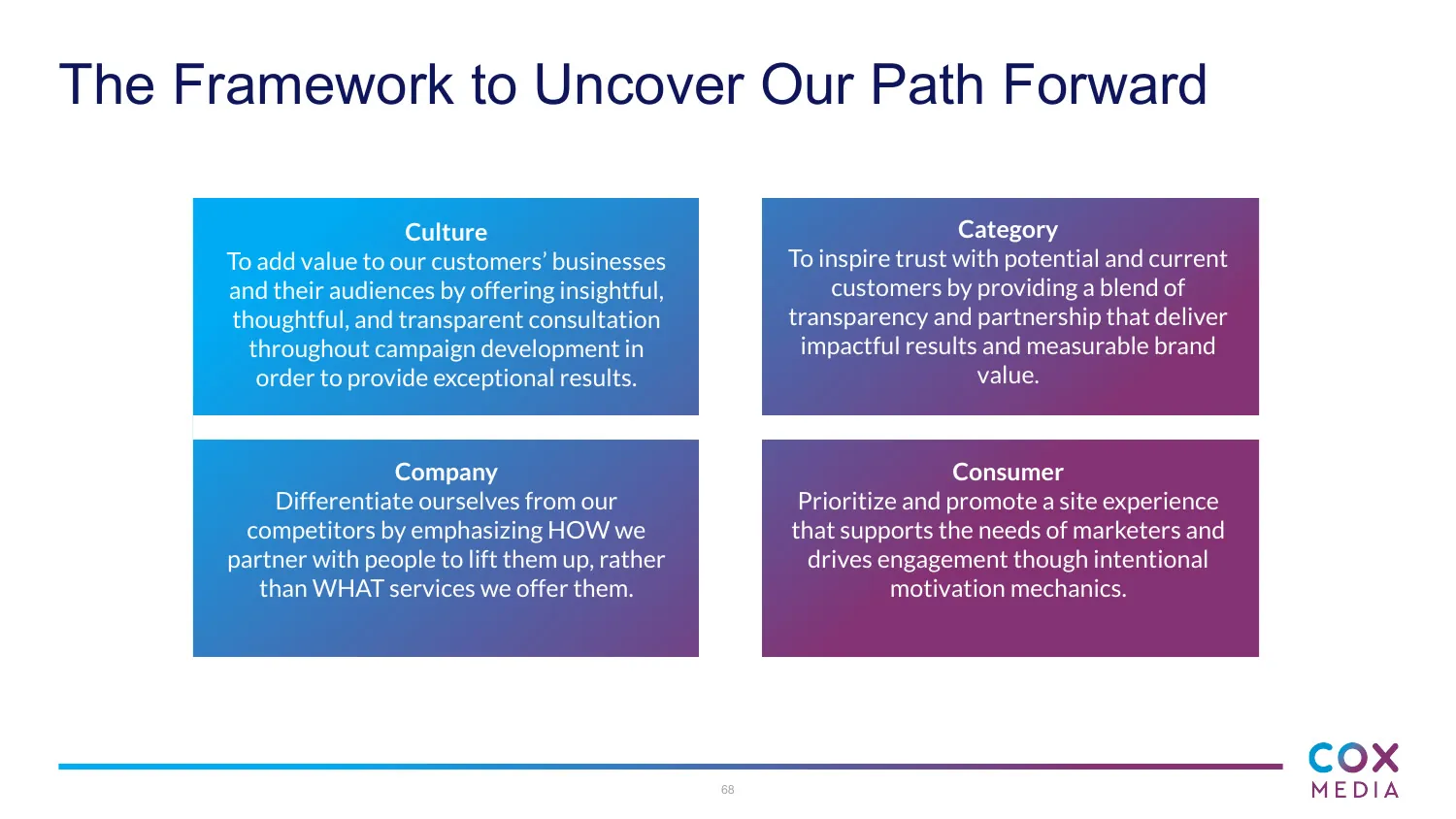
Our 4Cs analysis of Culture, Category, Company, and Consumer surfaced a hard truth: advertisers don’t take claims at face value. Much of what they spend can’t be traced to results, and competitors mostly sound the same. Meanwhile, CoxMedia.com was losing ground: traffic was down about 25,000 visitors year over year, and contact-form completions had dropped 28%.
The approach
The key call was what to compete on.
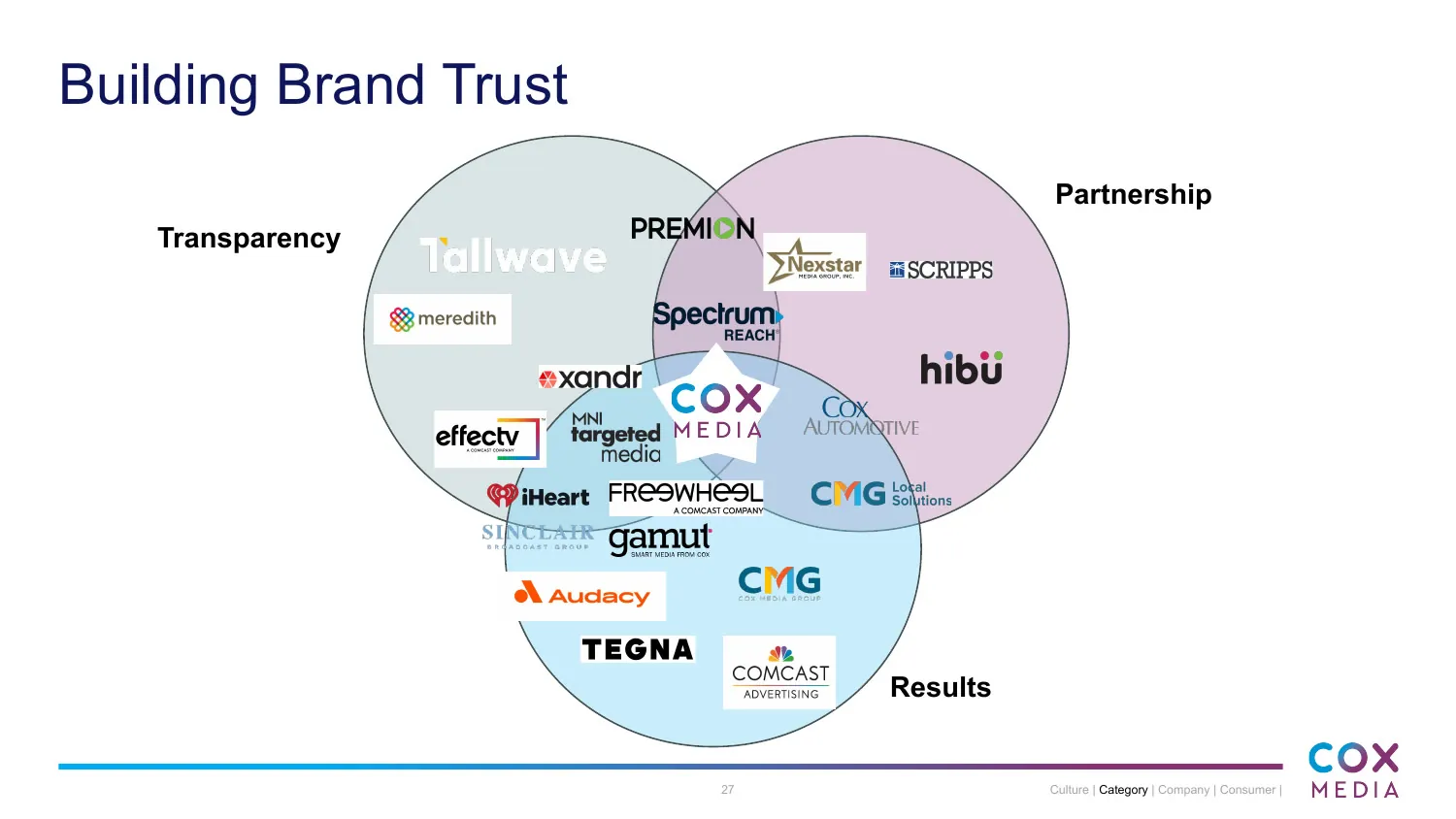
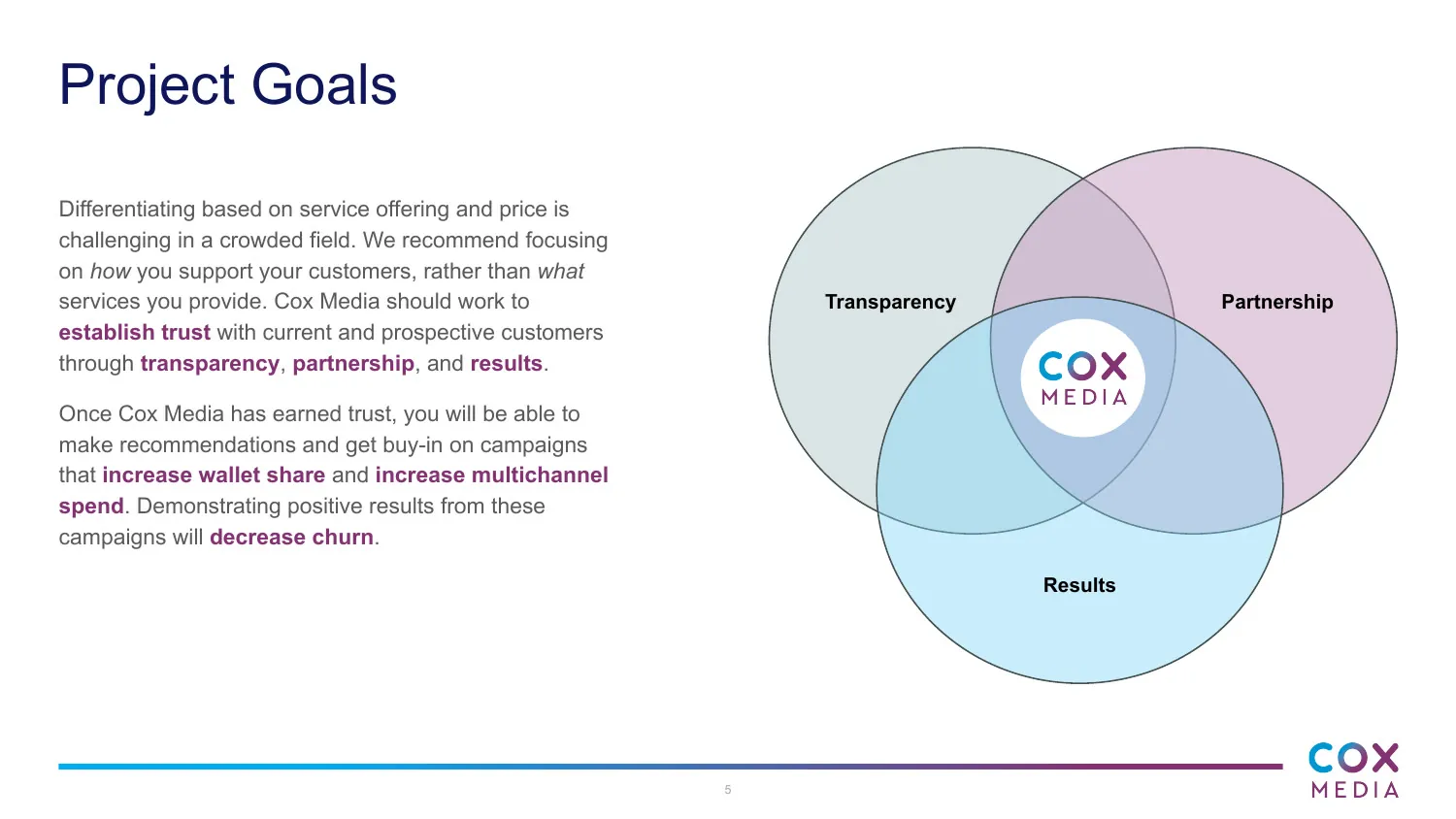
Cox Media’s services and prices looked a lot like everyone else’s, so a clearer list of services wouldn’t set it apart. In my roadmap, I made the case to compete on how Cox Media partners instead, and made trust the site’s primary goal, supported by transparency, partnership, and results. That one choice served both audiences that mattered: less experienced advertisers wanted an expert guide, and savvy ones wanted a partner who would make them look good to their own stakeholders.
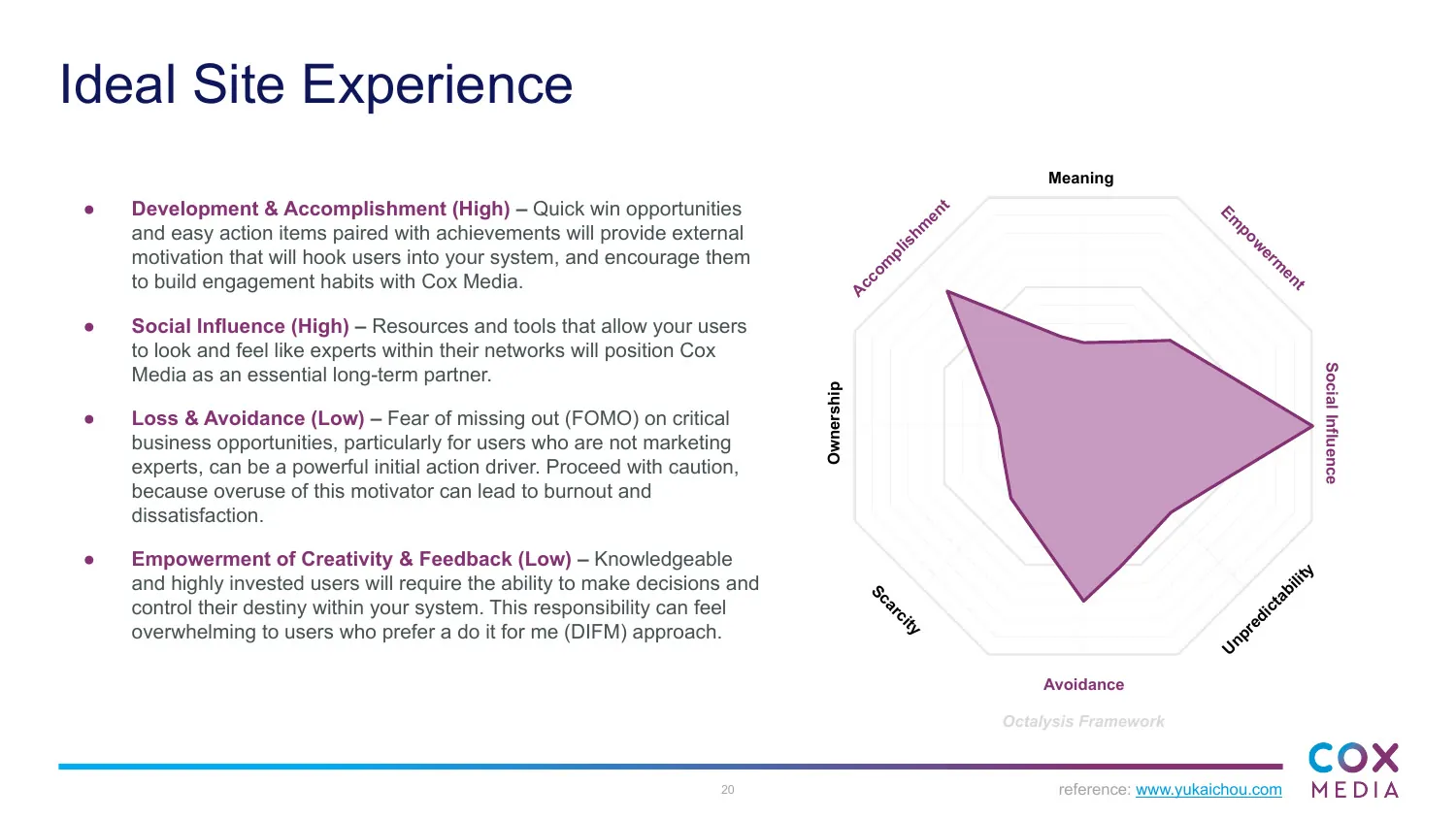
Using Applied Game Theory™, I matched Cox Media’s eight advertiser personas to motivation types and designed mechanics for each: a progress path through premium content, peer spending benchmarks to nudge advertisers toward new channels, and case studies that show what waiting costs.
Because prospects took four weeks or more to become customers, Dragon Army’s content team built the channel and content strategy around that window, with a premium content library that gives prospects a reason to come back and builds trust with every visit.
The design
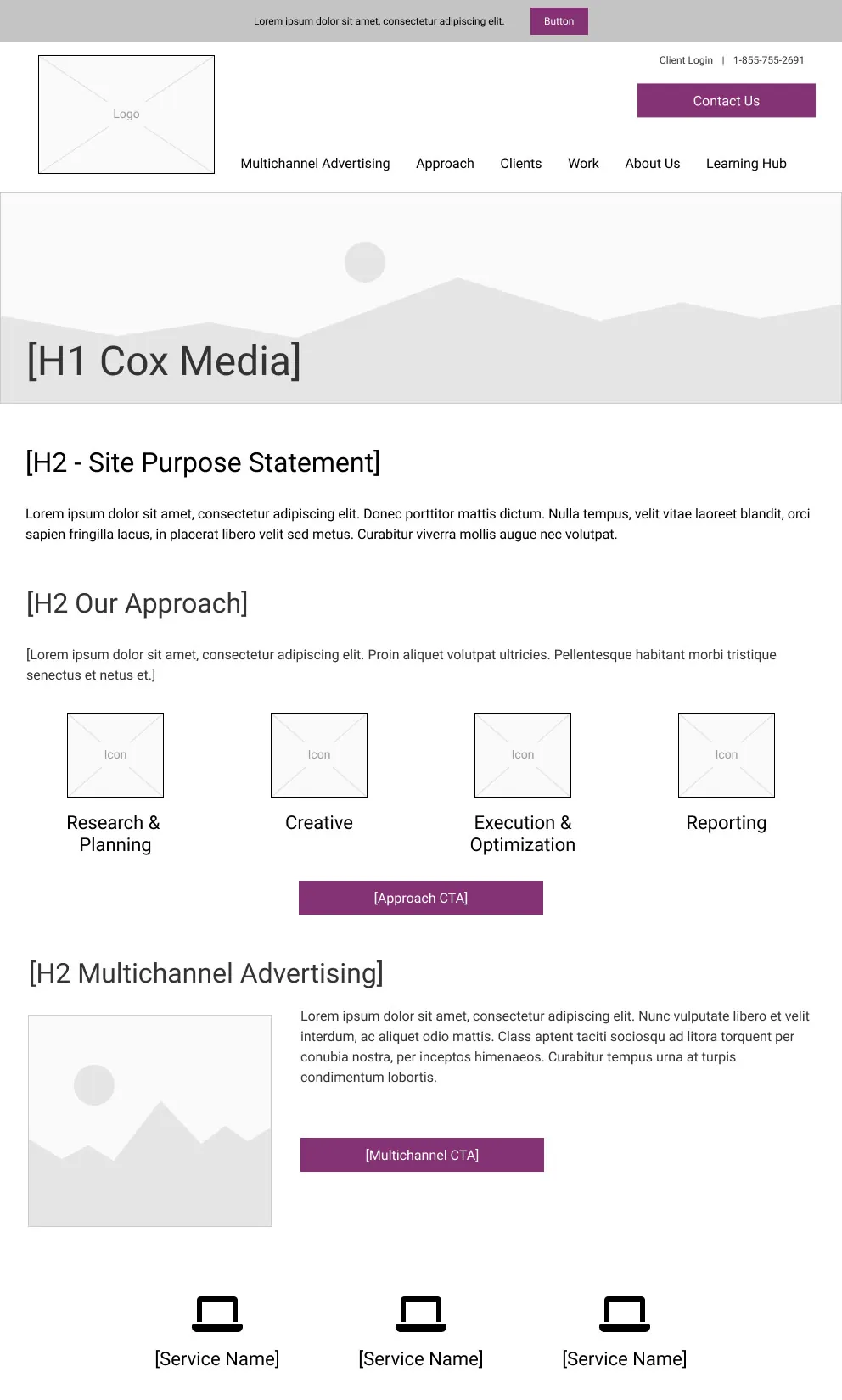
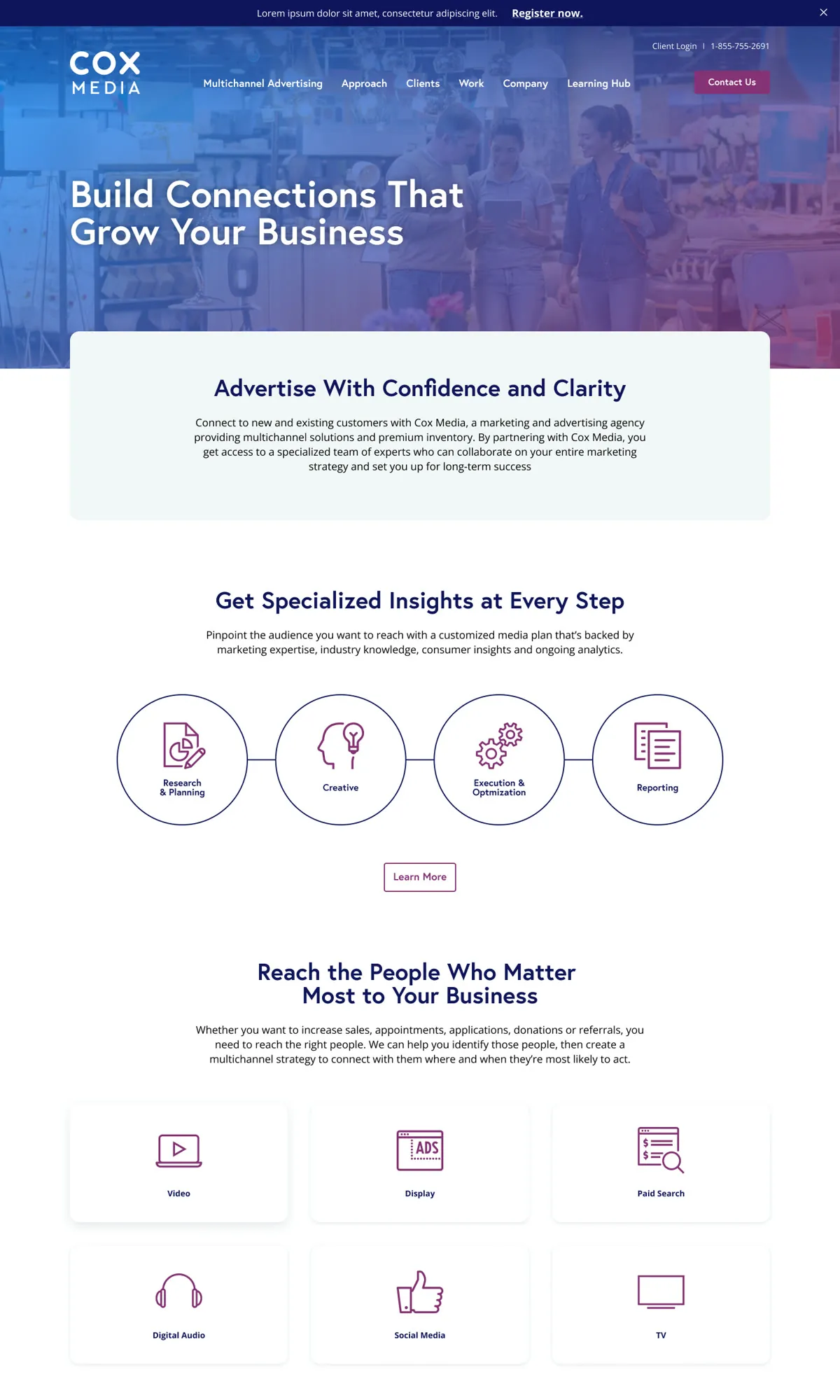
The new site shows how Cox Media works, not just what it offers.
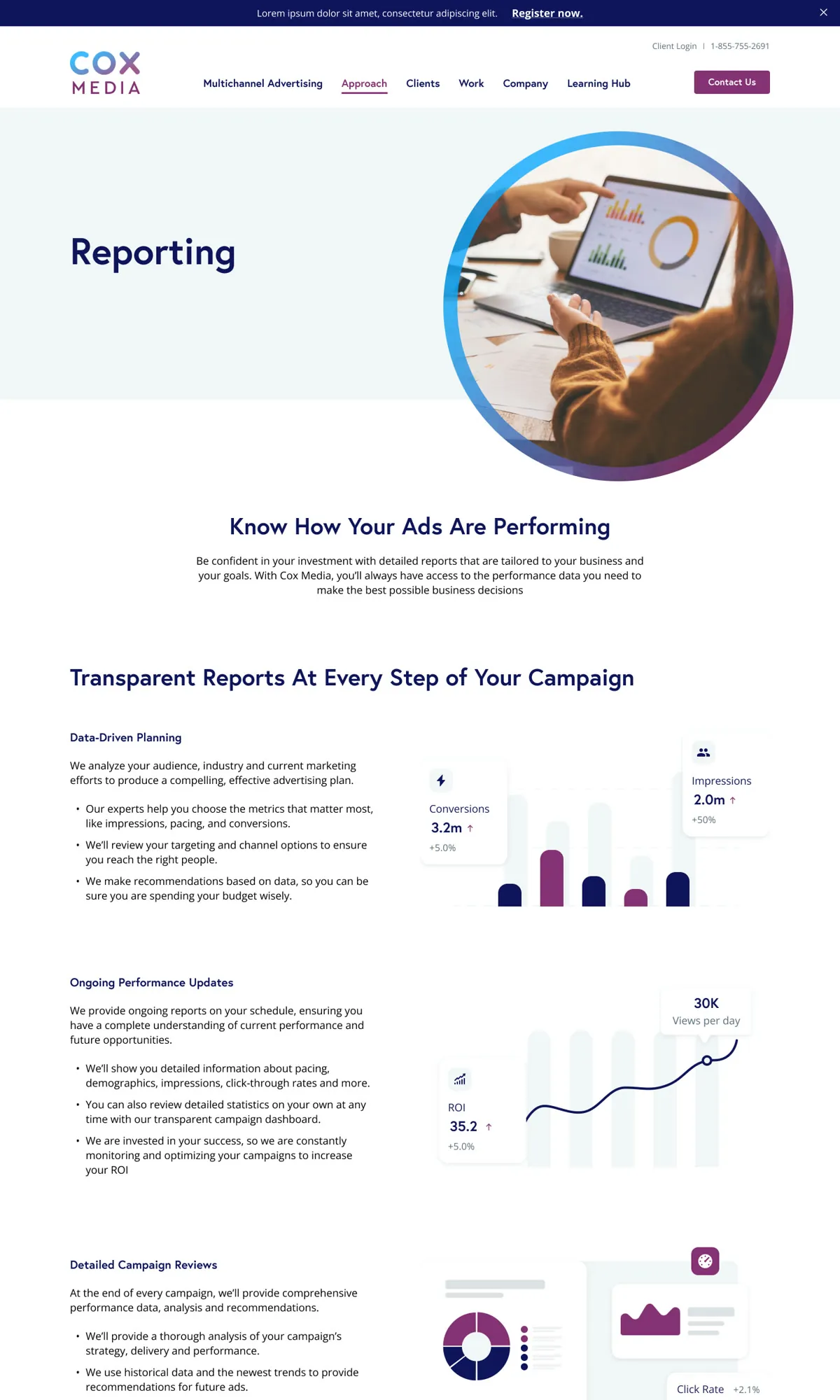
- An approach page: how Cox Media partners with advertisers, from planning through reporting.
- A reporting showcase: a preview of the customer dashboard, with an invitation to request a demo.
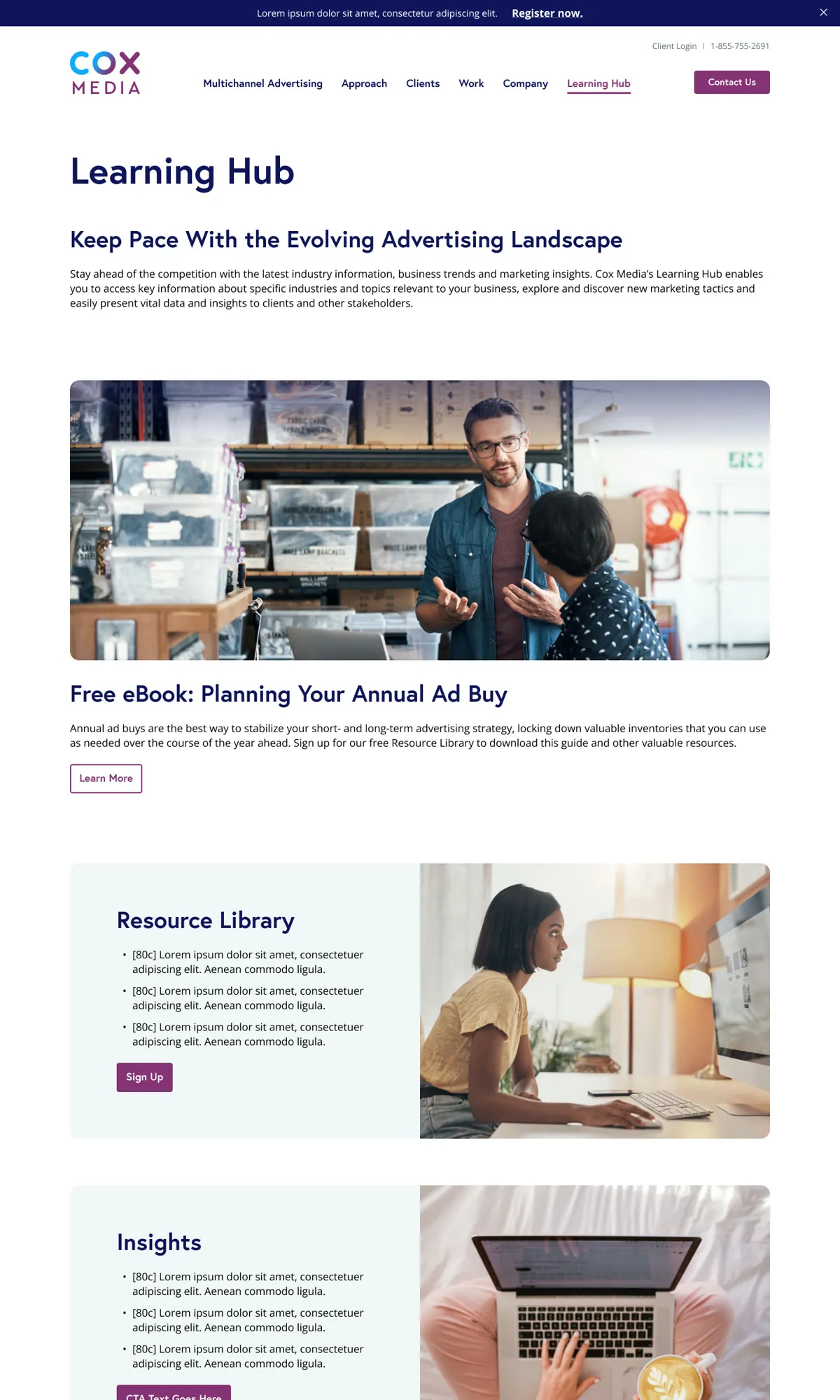
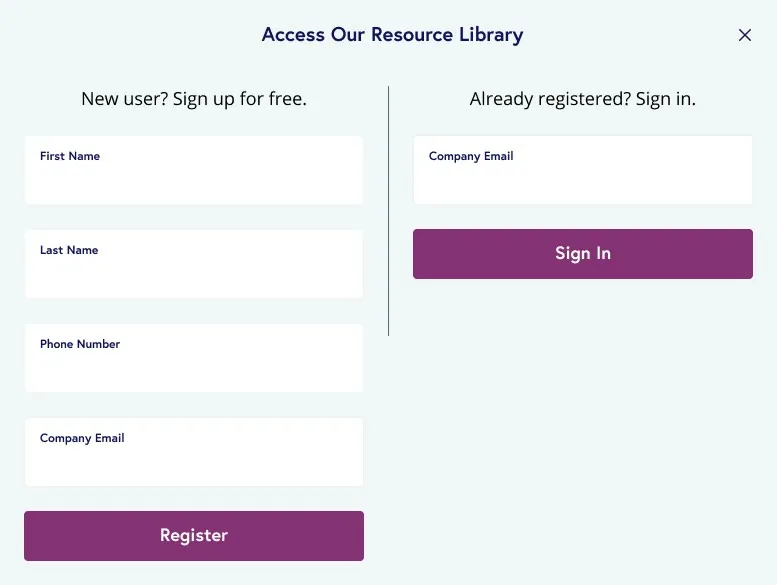
- A Learning Hub: a premium content library advertisers unlock by registering once, with guides, checklists, and presentation templates they can come back to.
- An interactive market map: where each service is available.
Launch and results
After the new CoxMedia.com launched, content engagement rose, and user surveys showed higher satisfaction and engagement, with inbound leads up 21%. The site also won a global Web Excellence Award for its game-theory-based strategy.
Validating the design
After launch, I tested the new site against the previous one with 25 participants, most of them marketing decision-makers, to see whether the strategy held up with the people it was built for.
The new design won 9 of 10 head-to-head comparisons, with the clearest wins on the approach and services pages. 88% of testers said the reporting page made them want to learn more, and 72% said they’d trade their email address for the Learning Hub. The home page was the closest call at 52%. Testers who preferred the old one liked its warmer imagery, which pointed to where the next round of work should focus.
What I learned
The hardest part of this project wasn’t the strategy or the design. It was content migration. The plan didn’t account early enough for moving existing content to the new site, and that made the path to launch harder than it needed to be.
So I built the process we’d been missing. I created templates for content inventory, migration planning, and 301 redirect mapping, and documented how to use each one. I worked with other teams across Dragon Army to assign an owner to every part of the process, and changed how we estimate projects so migration is scoped from the start.
Those templates shaped later redesigns, including Great Clips and UMCMission.org.